Shoes are the one item where being one size out is felt immediately. Clothes that are too big will wait a month. Shoes that are too short get in the way on the very first day.
Measuring in three steps
- Put a sheet of paper on the floor against a wall and stand your child so that the heel touches the wall.
- Draw round the foot, or simply mark the tip of the longest toe. Hold the pencil upright.
- Measure from the heel to the mark. Measure both feet and use the larger figure.
Add between half a centimetre and one centimetre to that number. That is the inner length the shoe should have.
The size chart
- 16 / 17 is 10.5 to 11 centimetres, roughly 0 to 6 months
- 18 / 19 is 11.5 to 12 centimetres, roughly 6 to 12 months
- 20 / 21 is 12.5 to 13.5 centimetres, roughly 1 to 2 years
- 22 / 23 is 14 to 14.5 centimetres, roughly 2 to 3 years
- 24 / 25 is 15 to 16 centimetres, roughly 3 to 4 years
- 26 / 27 is 16.5 to 17 centimetres, roughly 4 to 5 years
- 28 / 29 is 17.5 to 18.5 centimetres, roughly 5 to 6 years
- 30 / 31 is 19 to 19.5 centimetres, roughly 6 to 8 years
- 32 / 33 is 20 to 21 centimetres, roughly 8 to 9 years
The same chart is on our size guide page.
What to check once the shoe is on
- Have the child stand rather than sit. A seated foot is shorter.
- Press on the toe. There should be a thumb's width of room in front.
- The heel should not slip while walking.
- Look at the foot after taking the shoe off. Red marks mean the shoe is too narrow.
What we say about sizes
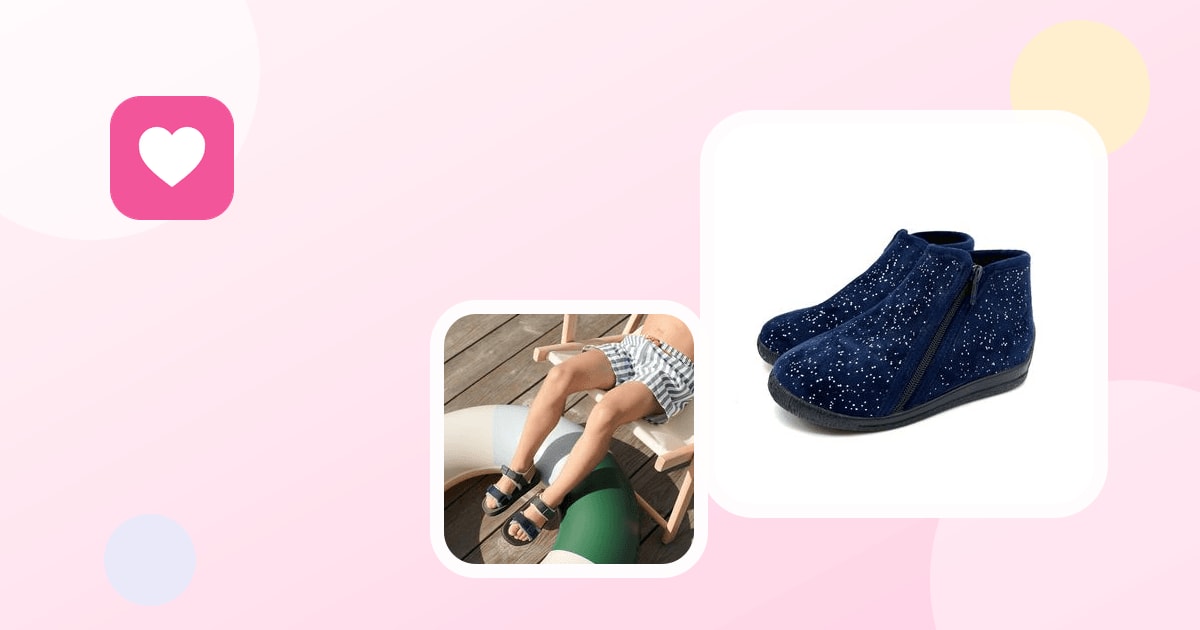
Every pair on our site states its European size and its inner length. Open kids shoes and pick a size in the filter.
If you are between two sizes, take the larger one. If you are unsure, send us the foot length in centimetres and we will tell you which pair fits. And if it still does not, our returns terms are simple.